
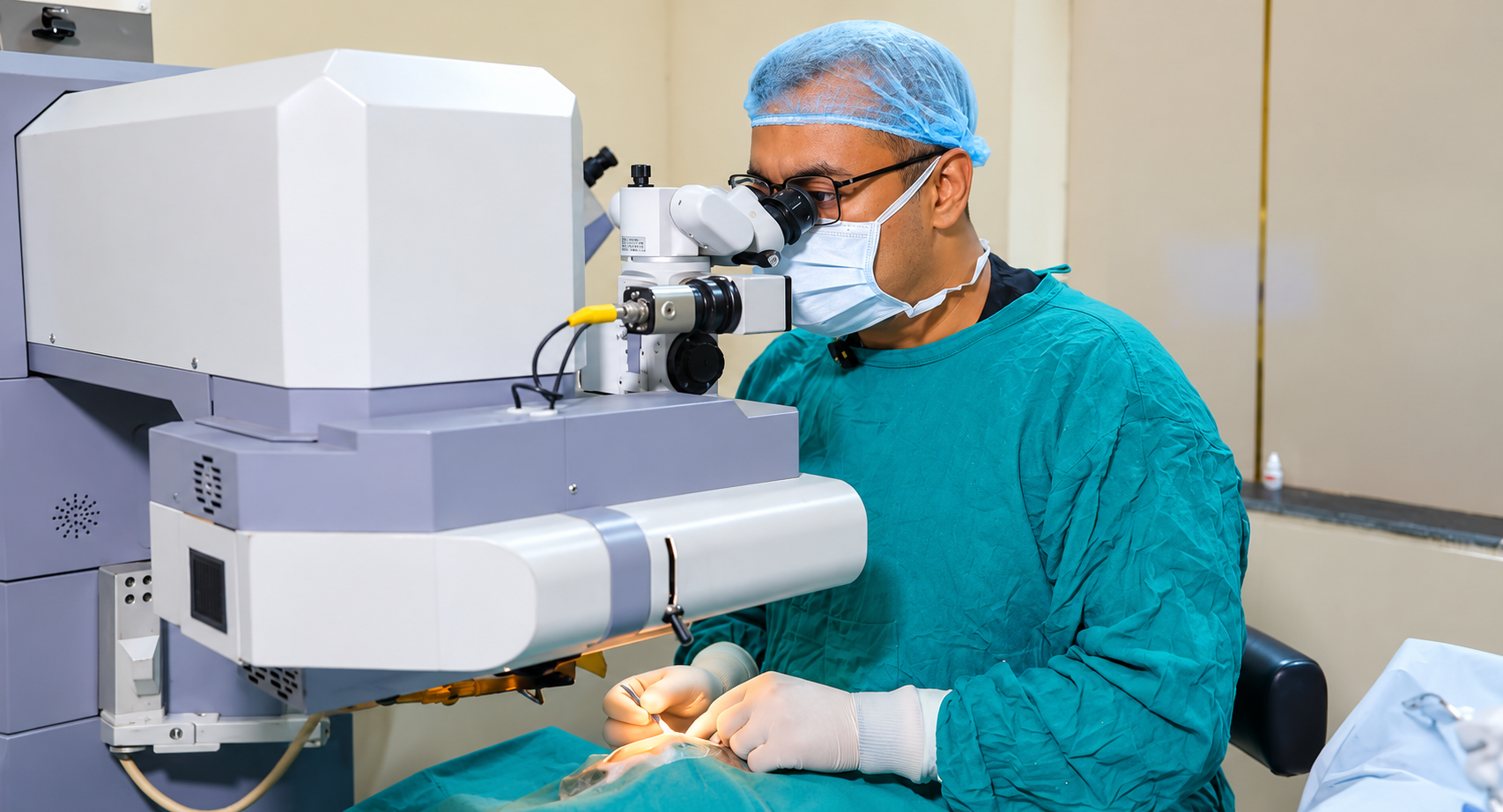
How each procedure works
During LASIK, a thin corneal flap is made, the flap is lifted, and an excimer laser reshapes the tissue beneath it before the flap is repositioned. A femtosecond laser may create the flap; the reshaping step is still a separate part of the plan. The name LASIK covers variations, so ask which exact technique and laser platform are proposed.
SMILE stands for small incision lenticule extraction. A femtosecond laser forms a lens-shaped piece of tissue, called a lenticule, inside the cornea. The surgeon removes it through a small opening so the corneal shape changes. There is no LASIK-style flap, but the procedure still permanently changes corneal tissue and has its own eligibility and complication profile.
Candidacy is not decided by the procedure label
The prescription range that can be treated depends on the locally approved device and the person’s measurements. A surgeon considers the amount and type of refractive error, the corneal shape and thickness, eye health, tear film, pupil conditions and medical history. A patient suited to one approach may not be suited to the other; some people may be advised to use glasses or explore another option.
Tell the clinician about contact sports, job vision rules, dry-eye symptoms, previous eye procedures and any prescription changes. Ask which findings support the recommendation. Avoid choosing SMILE just because “flapless” sounds safer, or choosing LASIK because it is more familiar. A treatment name cannot replace an explanation of personal risks.
Recovery and comfort: ask about your real schedule
Both approaches can involve temporary dryness, irritation, light sensitivity or changing clarity. Recovery differs between people and by the exact technique. Do not assume that the smaller incision means no symptoms or that an early clear view means healing is complete. Your surgeon should tell you when reviews happen and which symptoms require a call.
Before deciding, compare work, driving, exercise and screen plans for each option as explained by the treating team. Ask when you may resume swimming, make-up, contact sports and eye rubbing, and whether any job rules require a particular recovery period. These details may matter more than a generic promise that one option has “faster recovery.”
Dry eye and visual symptoms
Dry-eye symptoms deserve attention before either procedure. A pre-existing surface problem can affect comfort and measurements, and refractive surgery may produce or worsen symptoms. Some people hear that a flapless approach has a dry-eye advantage, but no single headline establishes what will happen in an individual case. Ask your surgeon to explain the evidence and uncertainty for your own eyes.
Glare, halos, starbursts, fluctuating focus and residual prescription are additional topics for consent. Risk depends on more than a procedure’s marketing category. Request a discussion of pupil conditions, corneal maps and what options remain if vision does not meet expectations.
Questions for an option-neutral comparison
- Which procedures are within the approved range for my prescription where I will be treated?
- What do my corneal shape, thickness and tear-film findings mean for LASIK and SMILE?
- How do the risks, recovery instructions and follow-up plans differ for my case?
- If I need further correction later, what options exist after each procedure?
- Is glasses-only care or a lens-based option reasonable, and why or why not?
The practical takeaway
A fair comparison describes what each option changes, what it preserves, its risks and its limits. If a clinic offers one technique but not another, ask for that distinction to be stated clearly; availability at any particular centre must be confirmed directly. Do not treat a technology name as a guarantee of suitability or outcome.
You can take time to consider the explanation and ask for written information. The best decision is not the one with the newest acronym; it is the choice that fits the clinical findings and the person’s priorities after informed consent—or the decision not to have surgery.
Common questions
Is SMILE safer than LASIK?
There is no universal answer for an individual. Each has different steps, eligibility and risks. Ask an ophthalmologist to compare the evidence and your measurements rather than relying on a slogan.
Does SMILE have no flap?
SMILE removes a lenticule through a small incision and does not create the broad corneal flap used in LASIK. It is still surgery that changes corneal tissue.
Which procedure recovers faster?
Recovery varies with the procedure, patient and activity. Ask your surgeon for a realistic timetable for work, exercise, driving and follow-up.
Can I choose SMILE without an eye examination?
No. The clinician must check prescription, corneal structure, eye surface and health, and confirm that the exact procedure is appropriate and available.
Further reading
Public patient information used as a starting point for this overview:
External references may describe a different country’s device approvals or care pathway. Confirm local requirements and advice with your clinician.