
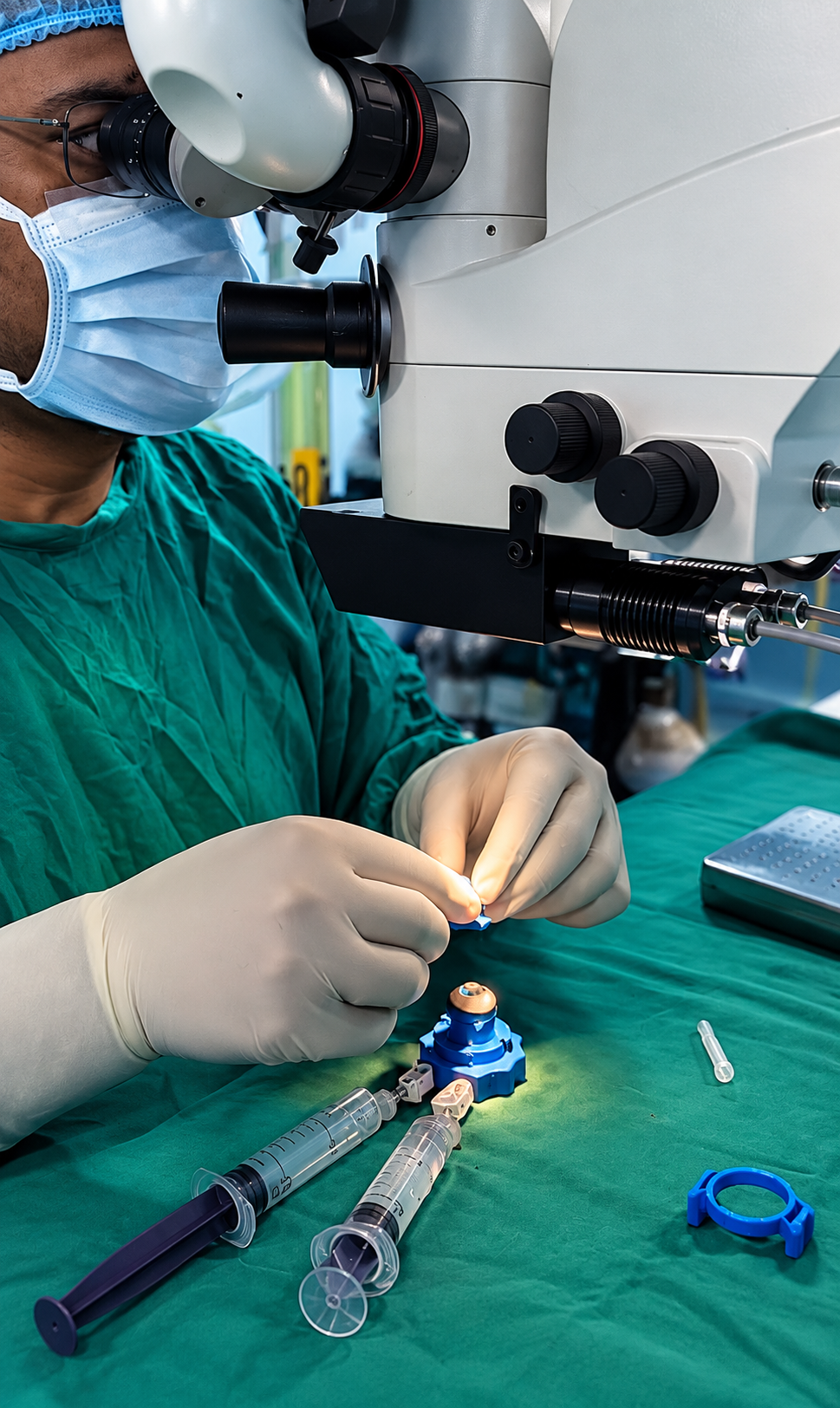
What the femtosecond laser does
LASIK has two broad technical steps: creating a flap and reshaping corneal tissue under it with an excimer laser. In Femto LASIK, a femtosecond laser creates the flap. The surgeon then lifts it so the excimer laser can perform the planned reshaping, after which the flap is repositioned. The exact device, settings and sequence are specific to the clinic and treatment plan.
The phrase “bladeless” refers to the way the flap is created, not to a procedure with no contact, no incision or no risk. Ask the surgeon to explain both laser steps and what you would experience. Clear terminology lets you compare providers without assuming the name alone guarantees a better outcome.
Why the word “advanced” is not a suitability result
Technology can affect how a procedure is performed, but suitability still depends on the patient’s prescription, corneal shape and thickness, tear film, eye health and other factors. A sophisticated device does not correct an unsuitable plan. The clinician should explain why a specific technique fits your measurements and what alternatives are available.
Device names and marketing terms can vary. Ask for the complete procedure name and the platform to be used, whether it is approved for the intended treatment where you live, and who will perform each step. If a clinic uses a branded term, ask which parts are a device feature and which parts are a clinical recommendation.
Questions for a consultation
- Which device creates the flap and which device reshapes the cornea?
- Why does this technique suit my maps, thickness and prescription better than another option?
- What are the flap-specific risks, aftercare instructions and sport restrictions?
- What does the estimate include, and what follow-up or enhancement terms are written down?
How to compare an offer fairly
If two clinics use different equipment, compare the entire care plan: the diagnostic evaluation, the surgeon’s explanation, the exact procedure, safety checks, aftercare and availability of follow-up. Ask whether the person counselling you is the person responsible for the clinical decision. You have the right to understand the plan before agreeing.
A higher price or newer machine is not proof of a better result. A responsible clinician will discuss why a proposed method is appropriate and when they would choose another path. If the answers are unclear, pause and seek clarification before scheduling elective surgery.
Common questions
Does “bladeless” mean there is no blade or incision?
It commonly means a femtosecond laser creates the LASIK flap instead of a mechanical microkeratome. A flap and surgical tissue changes are still involved.
Is Femto LASIK safer than all other LASIK?
A blanket claim cannot predict individual safety. Ask the surgeon to explain device-specific benefits, limitations and risks for your eyes.
Does Femto LASIK eliminate dry eye?
No. Dry-eye symptoms can occur after refractive procedures. Pre-existing symptoms and the eye surface should be evaluated first.
Is Femto LASIK suitable for everyone?
No. Corneal shape, thickness, prescription, eye health and personal factors can make it unsuitable. A detailed examination is required.
Further reading
Public patient information used as a starting point for this overview:
External references may describe a different country’s device approvals or care pathway. Confirm local requirements and advice with your clinician.