
Prescription stability and treatment range
LASIK is used to correct selected amounts of myopia, hyperopia and astigmatism, but the safe treatment range depends on the laser, the prescription and the cornea. A prescription that has changed recently can make a surgical result less predictable because the eye may continue changing after treatment. Bring earlier glasses prescriptions if available; they help the clinician understand the trend instead of relying on memory.
A high number on a spectacle prescription is not enough to decide whether surgery is possible. The surgeon also considers how much tissue would need to be changed, the shape and thickness of the cornea, and the quality of vision with correction. A lens-based option may be discussed in some cases, but it has different risks and eligibility requirements. The point is to choose based on measurements, not to fit every eye into LASIK.
Corneal shape, thickness and eye health
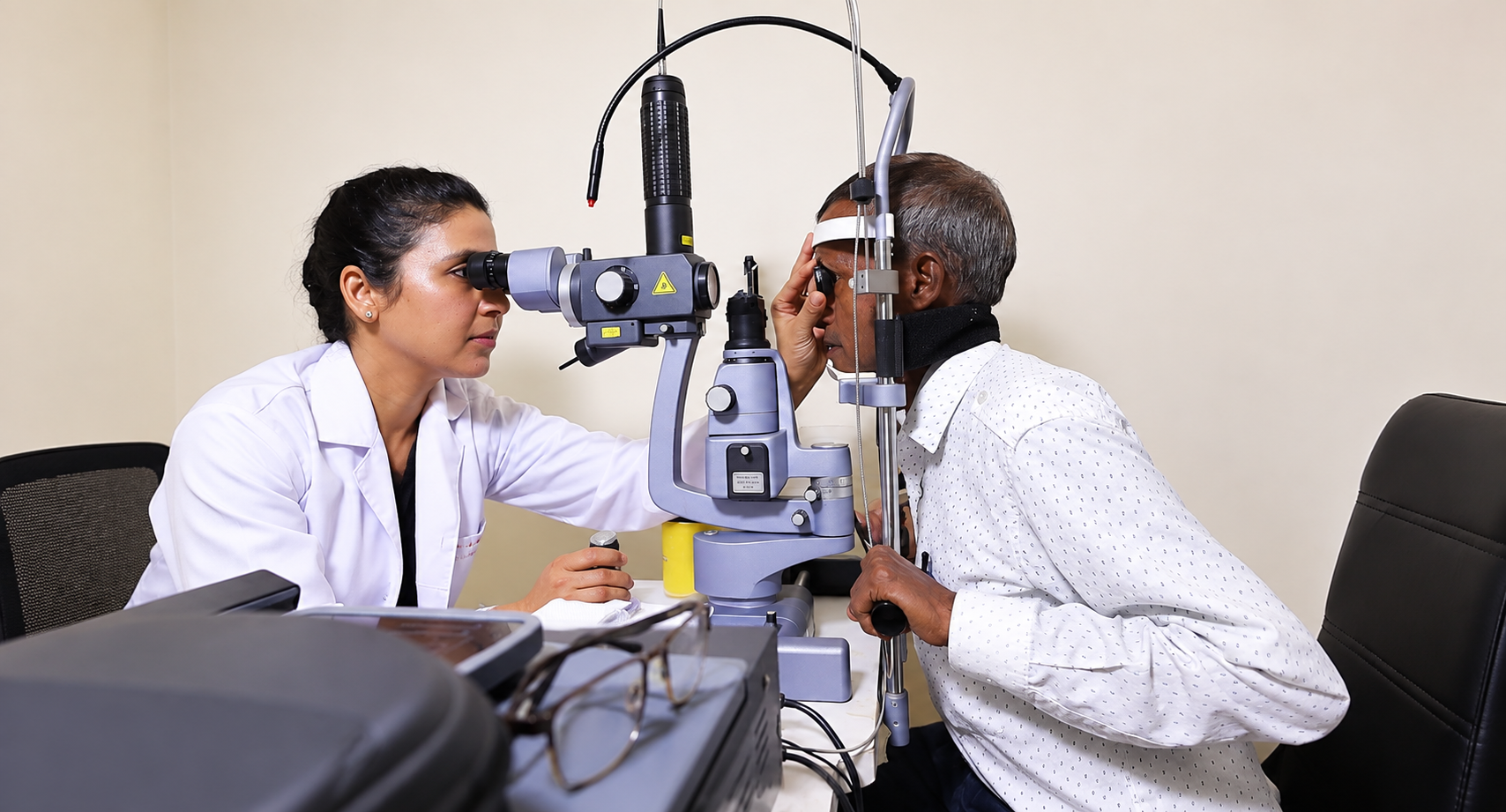
LASIK changes corneal tissue, so the cornea needs to be carefully assessed before treatment. Mapping can reveal shape patterns that are not visible from a glasses prescription. Thickness is considered together with the planned correction and the tissue that would remain. A thin, irregular or weakened cornea may make a flap-based procedure unsuitable; a clinician may recommend additional testing or rule out corneal laser surgery.
The rest of the eye matters too. Active inflammation, some corneal disorders, untreated eye-surface problems, prior surgery or other diagnoses may affect the choice or timing of treatment. The examination is an opportunity to identify those issues rather than a formality to complete after deciding on LASIK.
Dry eye, medicines and general health
Tell the clinician if your eyes burn, feel gritty, water often or become uncomfortable with screens or contact lenses. Dry-eye symptoms can influence measurements and may become more troublesome after some refractive procedures. The team may assess the tear film, treat the surface and repeat measurements before discussing surgery. Do not stop prescribed medication or use eye drops without professional advice.
Some illnesses and medicines can affect healing or cause the prescription to fluctuate. Diabetes, autoimmune disease, immune-system problems and medicines such as steroids are examples to discuss—not a diagnosis of automatic ineligibility. Share a complete medication list, including non-prescription products, and bring questions about pregnancy, breastfeeding or hormonal changes if relevant.
Age, daily life and realistic expectations
Many jurisdictions set minimum ages and device-specific criteria, while the practical question is also whether vision has been stable. Younger adults may still experience prescription changes. At the other end of adulthood, the natural lens and near focus become more relevant: LASIK does not stop presbyopia or treat every cause of blurred vision. Ask how age-related changes could affect your goals over time.
A person’s work, sport, driving, hobbies and tolerance for glasses are part of the decision. Some roles or contact sports have requirements that should be checked before choosing a procedure. Think about what you expect to do without glasses, what you would accept if glasses were still needed, and whether you can follow the aftercare plan. A consultation should include alternatives, including staying with corrective lenses.
What to bring to an evaluation
- Recent and older glasses or contact-lens prescriptions, if you have them.
- A list of medicines, eye conditions, prior procedures, injuries and relevant health history.
- Your work, sport, driving and near-vision needs, plus questions about time off and recovery.
- A support person or notes if you want help remembering the discussion and trade-offs.
When LASIK may not be the recommendation
A careful specialist may advise waiting, treating an eye-surface problem, ordering another examination, considering a different procedure or not operating. This is not a failure of the consultation. The purpose is to identify a plan whose expected benefit justifies its risks for the individual—not to guarantee that everyone who asks for LASIK will receive it.
If you hear a recommendation, ask the clinician to show which measurements support it and what finding would change the decision. You can ask for time to think or seek another qualified opinion. Do not feel pressured by a discount deadline or by language that frames a particular laser as automatically best for all eyes.
Common questions
What is the minimum age for LASIK?
Minimum ages and approved ranges depend on local regulation and the specific device. Adult age alone does not establish suitability; prescription stability and eye measurements also matter.
Does a high spectacle number rule out LASIK?
It may affect the risk-benefit discussion, but the number alone cannot decide. Corneal measurements, treatment range and alternatives must be reviewed by an ophthalmologist.
Can dry eye make me ineligible?
Dry eye can affect comfort, measurements and risk. The clinician may evaluate and treat it before deciding whether any refractive procedure is reasonable.
What if the surgeon says no?
Ask which findings led to that advice and whether waiting, treatment, another procedure or glasses are reasonable. Do not pursue surgery elsewhere without sharing your complete eye history.
Further reading
Public patient information used as a starting point for this overview:
- U.S. FDA: When is LASIK not for me? ↗
- American Academy of Ophthalmology: LASIK ↗
- American Academy of Ophthalmology: Questions to ask before LASIK ↗
External references may describe a different country’s device approvals or care pathway. Confirm local requirements and advice with your clinician.