
What astigmatism means
A person with astigmatism has a difference in focusing power across the eye’s meridians. The spectacle prescription records its amount and axis, but does not show every detail of corneal shape. Astigmatism can involve the cornea or the internal lens, and the clinical examination helps the ophthalmologist understand where it comes from.
Some people have regular patterns that are measurable and potentially treatable; irregular patterns may require a different evaluation. Blurred vision has many causes, so the clinician also checks the rest of the eye. A web calculator or a photo of glasses cannot replace refraction, corneal imaging and an eye-health examination.
How LASIK planning considers astigmatism
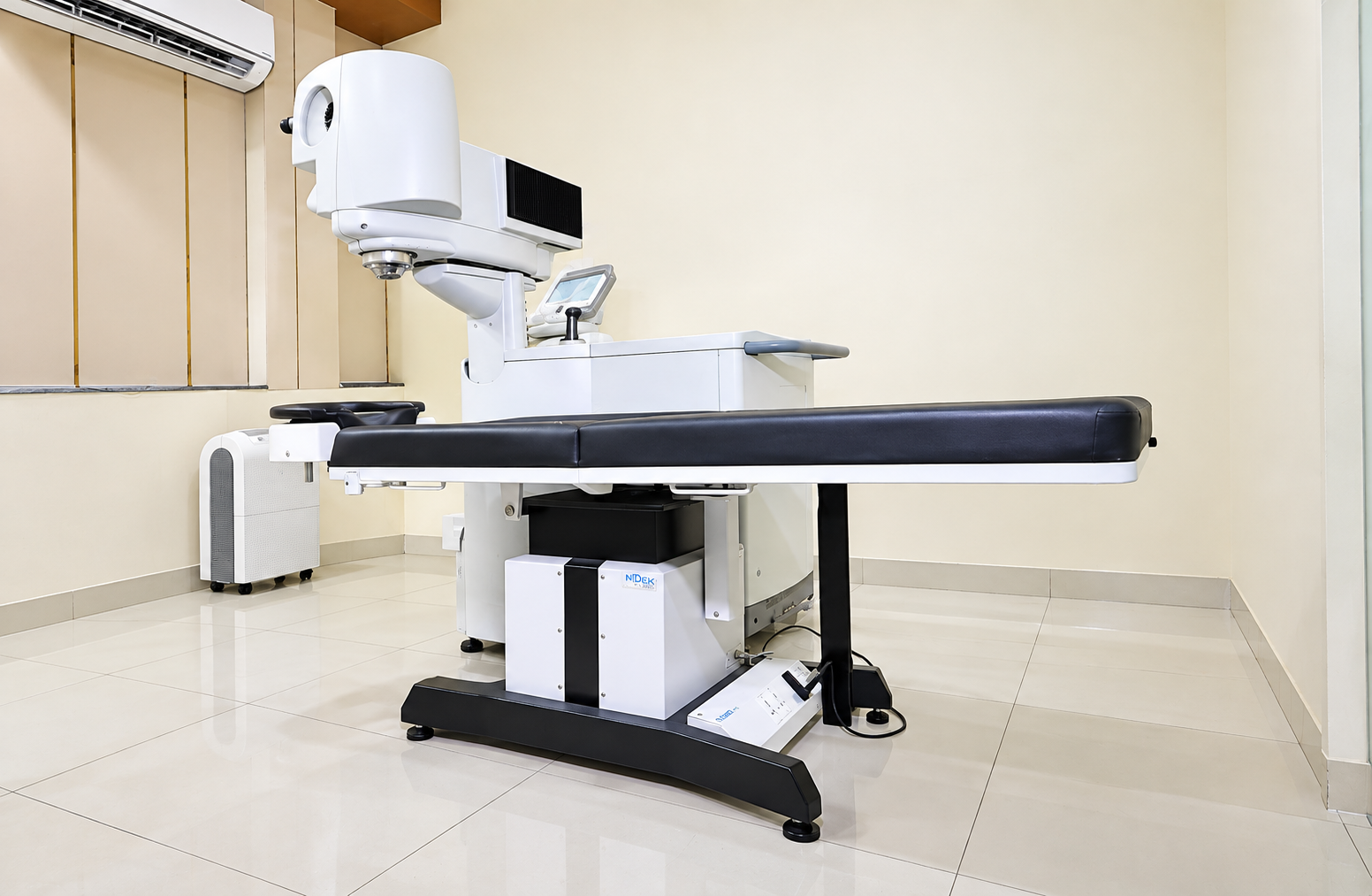
For suitable patients, an excimer-laser treatment plan reshapes corneal tissue to address selected refractive errors, which can include astigmatism within the relevant device range. Planning may use refraction and corneal mapping alongside other measurements. The surgeon confirms that the data are reliable and that the planned amount of tissue change is reasonable.
The amount of cylinder, axis, corneal thickness and shape, treatment zone and local laser indication can all affect the recommendation. A clinic should explain the plan in your own prescription, not just say that a laser “corrects astigmatism.” Ask what could remain after treatment and whether glasses may still be useful.
Stability and repeat measurements
A prescription that is changing can make a permanent treatment less predictable. The surgeon may compare earlier prescriptions and ask about contact-lens wear, illness, medicines or hormonal changes that could influence vision. Contact lenses can temporarily affect corneal shape, so follow the clinic’s instructions about pausing them before imaging.
If two measurements do not agree, the clinician may repeat tests rather than force a decision. That is a safety step. Ask what changed and whether another visit is needed. Do not stop a prescribed medicine or switch contact lenses to make a number appear stable.
Alternatives and realistic expectations
Depending on the eye, a clinician may discuss LASIK, surface ablation, SMILE where appropriate and available, a lens-based procedure, glasses or contact lenses. Those options have different limits and risks. A lens procedure is not an automatic substitute, and no surgical choice should be made only because it is advertised as “custom.”
Even when the prescription improves, some astigmatism or other refractive error may remain. Visual quality, dry eye, night vision and later changes can influence whether glasses are still needed. Ask how the surgeon measures success and what support is available if your vision is not as expected.
Questions to ask about cylinder and axis
- Is my astigmatism regular, and what do the corneal maps show?
- How stable have my sphere, cylinder and axis been over time?
- Is the proposed treatment within the local device indication and safe tissue plan?
- What residual prescription or need for glasses should I realistically plan for?
- Which non-surgical or alternative procedure options fit my measurements?
Common questions
Can LASIK correct astigmatism?
LASIK can treat selected astigmatism when the prescription and eye measurements are within the appropriate range. An ophthalmologist must evaluate the individual eye.
Does a high cylinder rule out LASIK?
The prescription amount is considered with axis, corneal shape, thickness, device range and other health findings. No single number from a webpage can determine eligibility.
Will I never need glasses again?
Not guaranteed. Some prescription can remain or change over time, and age-related near-vision changes still occur.
Why do I need a corneal map if I have a glasses prescription?
The prescription describes focusing correction; a map adds information about corneal shape that matters in planning corneal surgery.
Further reading
Public patient information used as a starting point for this overview:
- American Academy of Ophthalmology: LASIK ↗
- American Academy of Ophthalmology: Questions to ask before LASIK ↗
External references may describe a different country’s device approvals or care pathway. Confirm local requirements and advice with your clinician.