
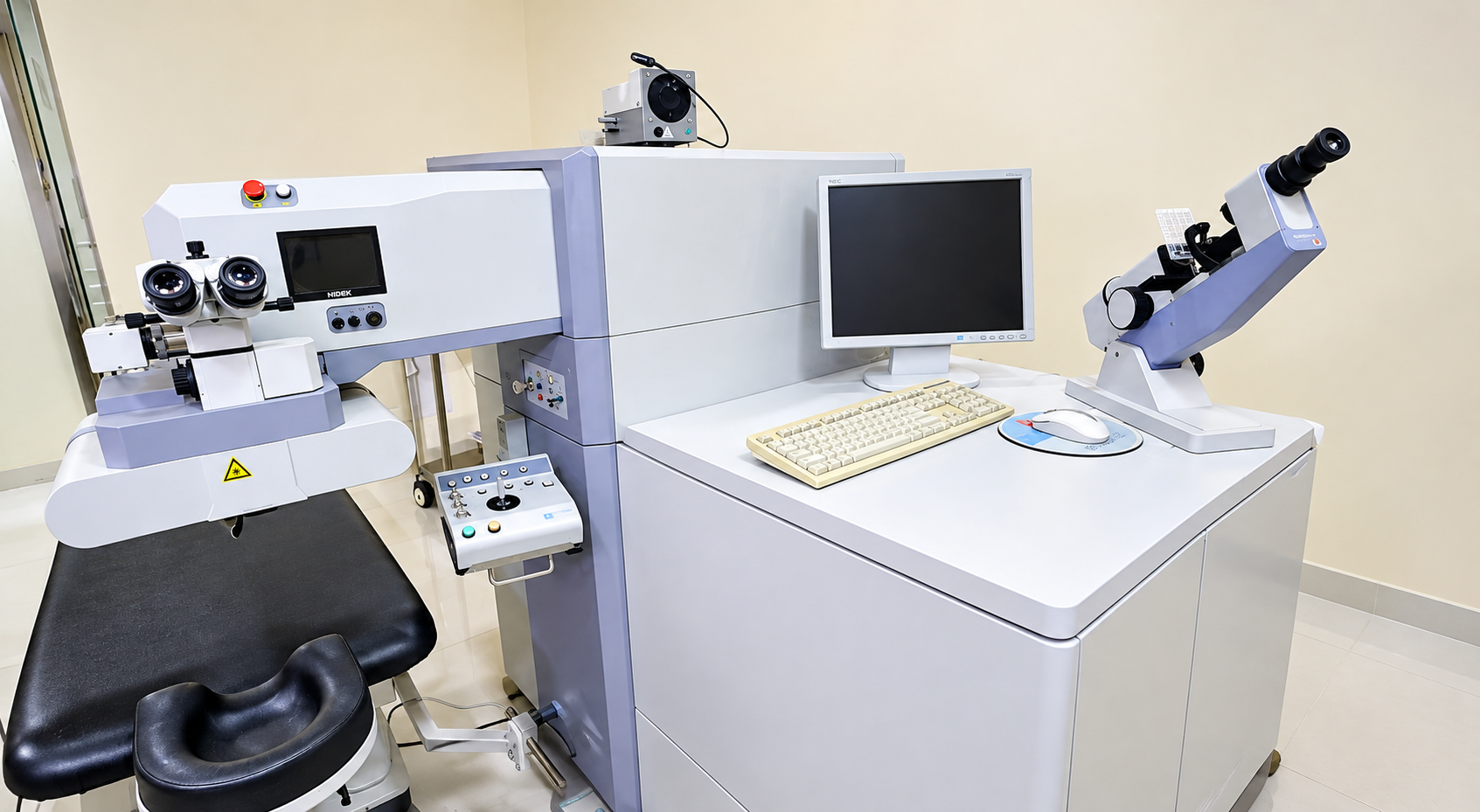
History and refraction
The appointment usually begins with the reason you are considering surgery, the activities that matter to you and your history of eye or general health. Bring past prescriptions where possible. Comparing records helps determine whether your refraction has been stable or changing. A clinician may measure how the eye focuses light and ask about contact-lens use, previous procedures, medicines and symptoms.
The prescription is important, but it does not show corneal strength or shape. Two people with identical glasses power can have different eye measurements and different recommendations. Tell the team about fluctuating vision, headaches, dry-eye symptoms or recent prescription changes; these details can affect whether measurements should be repeated.
Corneal mapping and shape
Corneal topography or tomography creates a map of the cornea’s surface or structure. The clinician reviews the map for regularity and patterns that may make corneal laser treatment unsafe or unpredictable. A scan is one part of an examination; its result must be interpreted alongside history, thickness, prescription and other findings.
If the map is unusual, the next step may be additional testing or a recommendation against LASIK. Patients should not try to interpret colors on a printout without the clinician’s explanation. Ask the ophthalmologist to point out the findings that matter and explain whether they alter the proposed procedure or rule out treatment.
Corneal thickness and tissue planning
A thickness measurement is considered together with the shape of the cornea and the amount of correction being planned. The surgeon estimates how the proposed treatment would change the tissue. A single number cannot establish that a cornea is safe for LASIK, and a “thicker is always better” rule does not replace a complete evaluation.
Ask what your measurements mean in plain language, what tissue would be treated and what alternatives are considered if LASIK is not suitable. Clinics may use different equipment and planning methods. The treating surgeon should explain the data from your own eyes rather than promising a result based on a generic threshold.
Tear film, eyelids and eye surface
The tear film keeps the front of the eye smooth and comfortable. Dry eye, eyelid inflammation or contact-lens-related surface changes can affect both symptoms and measurement quality. The clinician may ask about burning, grittiness, fluctuating blur and time spent on screens, and may examine the eyelids and surface. Testing and treatment depend on what is found.
If the surface needs treatment, surgery may be delayed while symptoms and measurements are reassessed. Mention any drops you use and whether contact lenses are uncomfortable. Do not hide dryness because you hope it will not affect eligibility; accurate information helps the surgeon discuss realistic benefits and risks.
The rest of the eye and pupil conditions
A broader eye examination can look for problems unrelated to the cornea that might explain symptoms or affect surgical planning. Depending on age and history, the clinician may examine the retina, lens, optic nerve or eye pressure. Pupil size in dim conditions can also be relevant when discussing nighttime visual symptoms and expectations.
Not everyone needs every possible test. If a test is recommended, ask what question it answers and whether its result changes the plan. If you are told you need more time or another measurement, ask when to return and whether you need to stop contact lenses or change anything before the visit.
Before you attend
- Ask the clinic how long to stop wearing your specific type of contact lens before measurements; do not guess.
- Bring your glasses, prior prescriptions, medication list and details of previous eye procedures.
- Allow time for examination and questions; pupil-dilating drops may affect near vision or light sensitivity if used.
- Arrange transport if the clinic says your examination or drops make driving unsafe.
Common questions
Is corneal mapping painful?
Many mapping tests are non-contact, but the exact equipment differs. Ask the clinic what each test involves and tell the technician if you are uncomfortable.
Can I wear contact lenses before LASIK tests?
Contact lenses can temporarily influence corneal shape. The clinic should tell you how long to stop wearing your specific lens type before measurements.
Does a normal scan guarantee I can have LASIK?
No. A scan is one piece of evidence. Prescription, corneal thickness and shape, tear film, eye health, medical history and goals all contribute to a decision.
Will everyone need the same tests?
No. The clinician selects tests based on the person’s history and findings. Ask why a recommended test is useful in your case.
Further reading
Public patient information used as a starting point for this overview:
External references may describe a different country’s device approvals or care pathway. Confirm local requirements and advice with your clinician.