
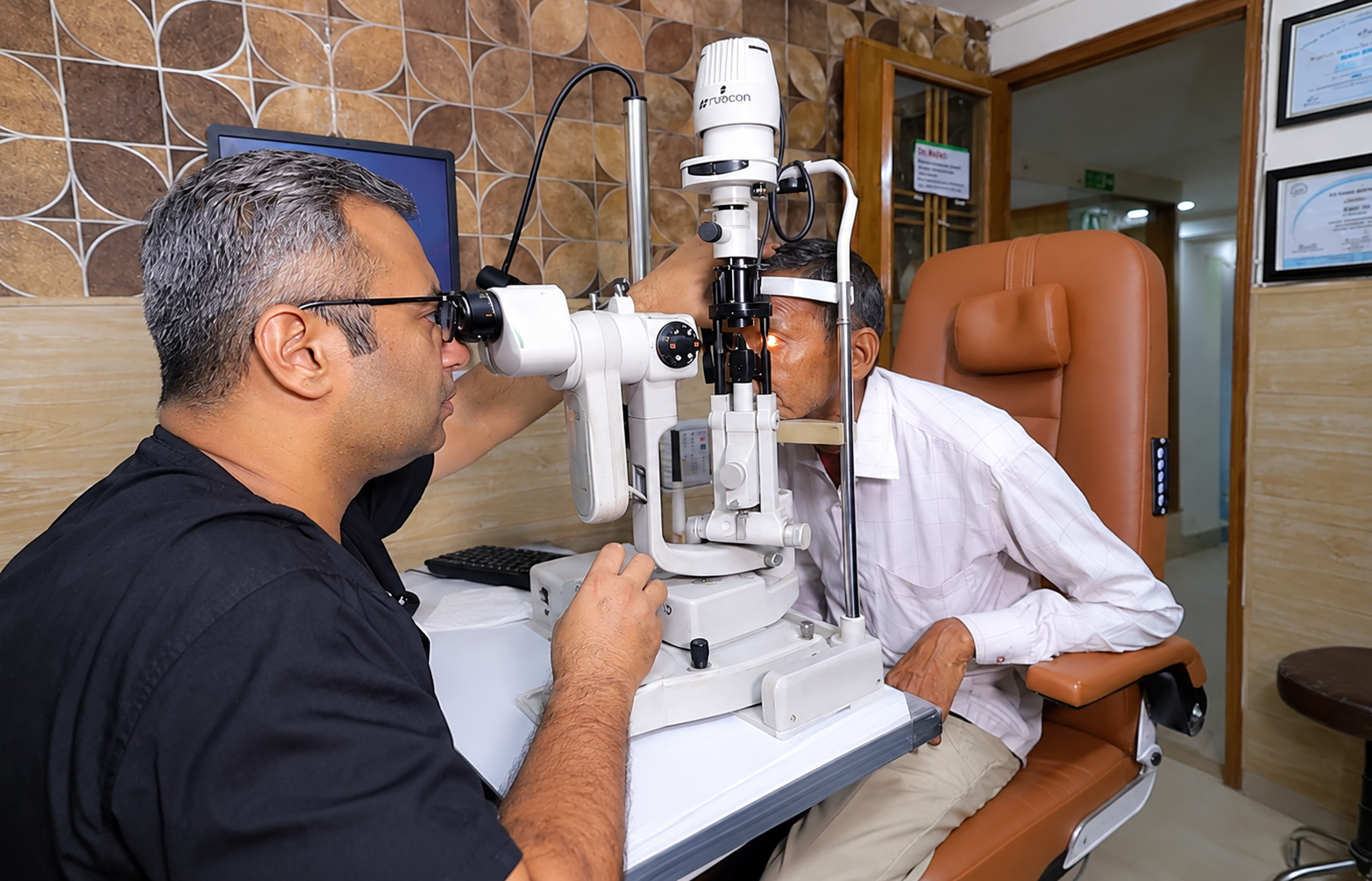
Corneal refractive error versus near-focus change
LASIK changes how the cornea bends light to reduce selected refractive errors such as myopia, hyperopia and astigmatism. Presbyopia is different: the natural lens gradually loses flexibility for close focus. Correcting the cornea does not make that lens young again, and age-related near-vision needs can develop even after distance vision is improved.
The effect depends on what correction a person uses now. Some nearsighted people remove their distance glasses to read; after distance correction, they may notice near tasks differently. Explain your current habits and what you hope to do without glasses so the clinician can discuss likely trade-offs.
Monovision: a strategy with compromises
Monovision aims to leave one eye clearer for distance and the other more useful for near work. The brain learns to rely on different eyes for different tasks, but the approach can reduce depth perception, contrast or comfort for some people. It does not recreate perfect focusing at every distance, and not everyone adapts.
A clinician may suggest trying the concept with contact lenses before considering any permanent correction. If offered, test driving, computer use, stairs, sport and reading in the lighting you normally encounter. Ask how the plan could affect night vision and what options remain if you dislike the difference between eyes.
Other options depend on the natural lens
Depending on age, lens health, prescription and goals, an ophthalmologist may discuss glasses, contact lenses, corneal surgery or lens-based approaches. These are not interchangeable procedures. Intraocular lens surgery carries different risks from corneal laser treatment, and a decision should not be driven by an internet trend or a desire to avoid reading glasses at any cost.
Ask what the examination shows about the natural lens and whether a cataract or other condition changes the timing. The best option may be to wait, monitor, use glasses or treat a different problem first. Every approach has limitations, and future age-related changes can still affect vision.
Build expectations around real activities
List the distances you use in a normal day: phone, books, laptop, dashboard, people across a room and signs while driving. Tell the surgeon which tasks matter most and whether night work, fine detail or depth perception is important. This information is more helpful than a general request for “20/20 vision.”
Ask which tasks may still need glasses, whether correction could shift over time, and what an enhancement would or would not address. Be cautious about claims that one laser procedure cures presbyopia permanently. A clear explanation should separate distance correction from the natural lens’s age-related near focus.
Questions about presbyopia at your appointment
- Is presbyopia already affecting my daily vision, or is it expected to develop soon?
- What does my natural lens examination show?
- Would a reversible monovision trial help me understand the trade-off?
- How might reading, computer work, night driving and depth perception feel after the proposed plan?
- What options remain if I need reading glasses or my vision changes later?
Common questions
Can LASIK cure presbyopia?
LASIK reshapes the cornea; it does not reverse the natural lens changes that cause presbyopia. Discuss near-vision strategies and their trade-offs with an ophthalmologist.
Will I need reading glasses after LASIK?
You may. Near-vision needs depend on age, current prescription, treatment target and natural lens. No website can predict this precisely for an individual.
Is monovision right for everyone?
No. Some people find the difference between eyes uncomfortable or notice changes in depth perception. Ask whether a contact-lens trial is suitable.
Does a lens implant permanently solve presbyopia?
Lens-based surgery has its own indications, benefits, limitations and risks. Ask a surgeon to explain options based on your examination rather than expecting a permanent universal fix.
Further reading
Public patient information used as a starting point for this overview:
- American Academy of Ophthalmology: Questions to ask when considering LASIK ↗
- American Academy of Ophthalmology: LASIK ↗
External references may describe a different country’s device approvals or care pathway. Confirm local requirements and advice with your clinician.